


Licorímetro
Discover, understand and share the world of alcohol from a single social experience.
- Role
- Product Architecture · UX/UI Design · Mobile Development
- Timeline
- 2023 · Academic project
- Tools
- AndroidStudio · Firebase · Figma · Git
01 Problem
A social ecosystem built around uncertainty
Licorímetro was born from a simple truth: when people come of age, alcohol becomes completely unfamiliar territory. What to drink. How much it costs. What it tastes like. What experiences it creates. The app proposed a single platform combining camera recognition, contextual information, community reviews, gamification and social discovery for any type of alcoholic beverage.
Unlike platforms limited to wine or beer, Licorímetro envisioned a broader scope — any beverage, any social context, any level of experience. The project combined architecture thinking, UX/UI design and mobile development built almost entirely solo within a week of intensive work.
Alcohol as a fragmented information system
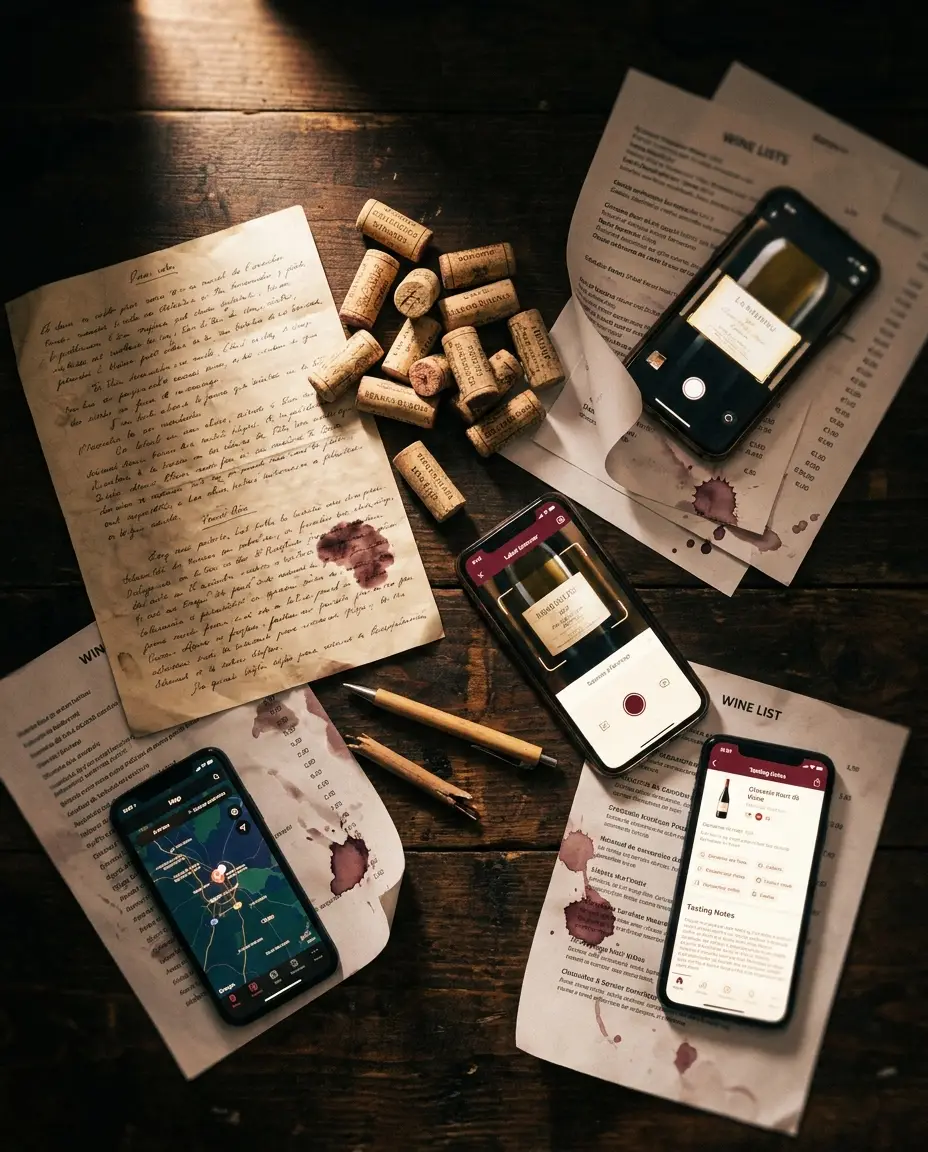
The experience of discovering alcohol is full of uncertainty and friction. Information is scattered, reviews are unreliable, and no existing platform addresses the full spectrum of alcoholic beverages with a social-first approach.
- Information dispersed across unrelated platforms.
- No visual recognition for beverages beyond wine.
- Reviews limited to premium segments.
- Buying decisions based on guesswork.
- No social layer for discovery and sharing.
- Existing apps siloed by category — wine only, beer only.
- Young users completely underserved.
02 Process
Building computer vision without mobile experience
One of the greatest technical challenges of the project was the OCR system. The original plan relied on third-party visual recognition APIs — but during production, that solution stopped working.
With very little prior experience in mobile development, the system had to be rebuilt manually from scratch, using bitmap analysis and basic image processing. The result was a functional prototype capable of identifying beverages whose labels contained clear, readable text.
More than technical precision, the process represented accelerated learning, autonomous research and problem-solving under pressure — all within a week of continuous development.
- Third-party API failed mid-production.
- Rebuilt using bitmap map analysis.
- Basic image processing without ML frameworks.
- Functional prototype identifying text-label beverages.
- Built within a single week of intensive development.
From discovery to community
- 01
Discover & Scan
The user encounters an unfamiliar beverage and opens the app. The camera module activates for instant scanning or manual search from the discovery feed.
- Central camera access in main navigation.
- OCR scanning for text-label recognition.
- Browse recommendations and trending items.
- Search by name, category or occasion.
- 02
Learn & Explore
After recognition, the product page surfaces contextual information: origin, alcohol content, flavor profile, price range and a community-built knowledge base.
- Detailed product profile page.
- Community reviews and ratings.
- Price estimates from collaborative data.
- Related products and discovery suggestions.
- 03
Experience & Share
After the experience, the user contributes back to the ecosystem: writing reviews, rating quality and flavor, and publishing to their social Bodega.
- Review submission with multi-dimensional ratings.
- Add to personal Bodega — public or private.
- Create or add to social playlists.
- Share experiences to the community feed.
- 04
Earn & Belong
Consistent contribution unlocks badges, improves reputation and builds community standing — creating a feedback loop of discovery and engagement.
- Badge system for discovery milestones.
- Reputation score based on reviews and activity.
- Unlock new content as expertise grows.
- Community leaderboards and social following.
03 Decisions
A social network built around discovery
OCR Scanner
Camera-based beverage recognition. Point at a label and instantly access product information, reviews and community data.
Community Reviews
Ratings on quality, flavor, price and experience. Every review enriches the shared knowledge base for the entire community.
Your Cellar
A personal digital cellar — public or private. Save favorites, build collections and curate playlists of beverages by occasion.
Badge System
Gamification based on discovery milestones: categories explored, reviews submitted, community participation and engagement.
Social Playlists
Curated beverage collections by occasion, mood and event type. Shareable across the community and discoverable by others.
Smart Recommendations
Personalized suggestions based on favorites, past interactions and community behavior — a discovery engine for new experiences.
Community Pricing
A collaborative system to estimate real market prices, detect overcharging and help buyers make more informed decisions.
Thinking like a startup before building one
Although the final prototype was limited, the conceptual architecture of Licorímetro contemplated a much broader ecosystem. The system included authentication, profiles, reputation, gamification, smart recommendations, social storage, community interaction — and potential marketplace integrations.
INPUT
- Camera + OCR — Bitmap analysis
- Manual Search — Discovery feed
CORE
- Product Database — Labels · Catalog
- Community Engine — Reviews · Social
- Auth & Profiles — Firebase · JWT
USER LAYER
- Tu Bodega — Personal cellar
- Badge System — Gamification
- Recommendations — Smart feed
04 Result
What I'd build differently today
| Aspect | Then (2023) | Now |
|---|---|---|
| Recognition | Bitmap OCR | Computer vision + AI |
| Architecture | Academic MVP | Production-scale system |
| Recommendations | Manual logic | ML-based personalization |
| Design system | Custom ad-hoc | Full design system |
| Testing | Manual QA | Automated test coverage |
| Data modeling | Basic schema | Scalable relational model |
More than a university app
Licorímetro never became a real startup. But it represented something more important: the ability to transform an everyday need into a complex digital system — combining product thinking, UX design and engineering within a single cohesive idea.
It marked the first contact with mobile development, the first experience with OCR, and one of the earliest real exercises in product architecture. More than the technical result, the project proved that curiosity, resilience and learning speed can turn a university idea into a vision with genuine potential.

Next case